Widowhood Financial Planning for Women
Losing a spouse can be overwhelming, and financial decisions may feel heavier than usual. The goal is not to rush. The goal is to stabilize first, then make thoughtful decisions at the right pace.
If this is you, you’re in the right place
- You’re unsure what needs to happen now and what can wait.
- You’re receiving forms, calls, and advice from multiple directions.
- You want calm, structured guidance without pressure.
- You want to protect yourself from avoidable mistakes.
What to do first
- Ensure you can access cash and pay bills.
- Gather key documents and account information.
- Identify the benefits and deadlines that matter.
What can usually wait
- Major investment changes.
- Big home decisions; unless required for cash flow or safety reasons.
- Permanent choices before you understand options.
Decisions that deserve extra care
- Social Security survivor choices.
- Inherited retirement account decisions, especially IRAs.
- Insurance and tax choices in the year of death and beyond.
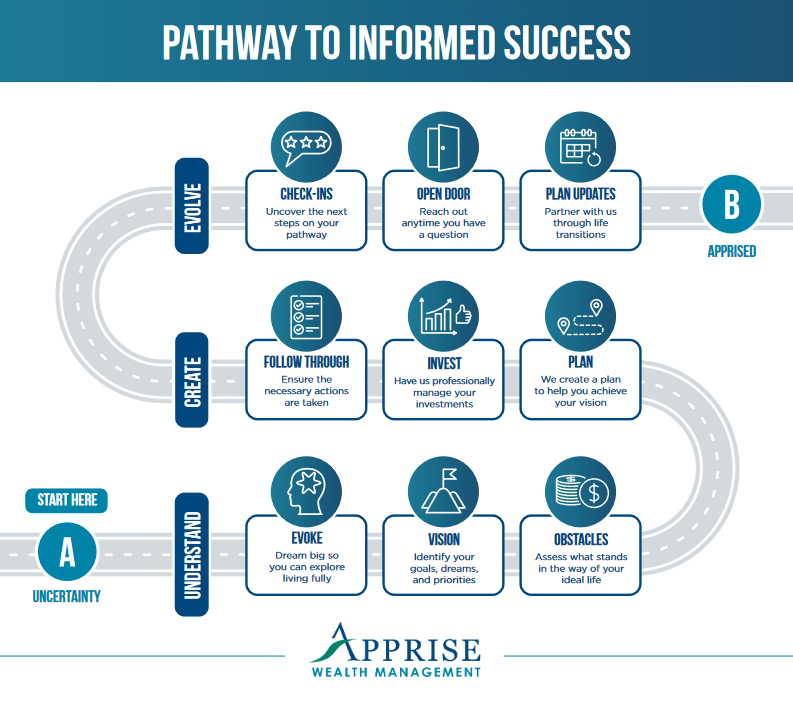
How Apprise supports you through widowhood
- Create a simple plan for stability and next steps
- Coordinate cash flow, taxes, and investment decisions
- Provide an ongoing process as life and priorities evolve
Frequently Asked Questions
How soon after my spouse dies should I meet with a financial advisor?
There is no required timetable. Some financial matters need attention fairly quickly, while many major decisions can wait. An early conversation can help you identify what is urgent, what has a deadline, and what does not need to be decided yet.
What financial decisions need to be made first after losing a spouse?
Start with the basics: making sure you can access cash, pay bills, locate important documents, and understand the accounts and benefits available to you. From there, we can help identify deadlines and create a manageable list of next steps rather than trying to address everything at once.
Should I make changes to my investments right away?
Usually, there is no reason to make major investment changes simply because your spouse died. Before changing a portfolio, it is helpful to understand your cash-flow needs, taxes, risk tolerance, income sources, and how the investments fit into your life in the future.
How do Social Security survivor benefits work?
The answer depends on factors such as your age, your spouse’s benefit history, and whether you are eligible for benefits based on your own work record. The timing of a survivor-benefit claim can affect the benefits you receive over your lifetime, so it is worth reviewing your options before making a decision.
What happens to my spouse's IRA or other retirement accounts?
The rules depend on the account type, your relationship to the account owner, your age, and other circumstances. A surviving spouse may have options that are not available to other beneficiaries. Before moving or combining retirement accounts, it is important to understand the tax and distribution consequences of each choice.
What tax issues should I be aware of after my spouse dies?
The year of death can involve several tax considerations, including filing status, retirement-account distributions, investment income, capital gains, estimated taxes, and potential changes in your tax situation in future years. We look at both the immediate tax questions and how today’s decisions may affect your taxes in the future.
Can you help me decide whether to stay in my home?
Yes. The decision is about more than whether you can afford the mortgage or property taxes. We can look at cash flow, maintenance costs, taxes, your other financial resources, and how the home fits into the life you want going forward. Unless there is a financial or safety reason to act quickly, this decision often deserves time.
Will you work with my attorney, CPA, or other professionals?
Yes. Widowhood can involve overlapping financial, tax, estate, insurance, and legal questions. When appropriate, we can coordinate with your other professionals, so we consider decisions jointly rather than in isolation.
Do you offer hourly or one-time planning?
No. Apprise works with clients through an ongoing advisory relationship.
What is your minimum required fee to become a client?
We base our minimum fee on the scope of work and the ongoing relationship. In most cases, clients should expect a minimum annual fee of $8,000. We can clarify fit quickly on a discovery call.
Why Choose Us
INTEGRATED APPROACH
It is through detailed financial conversations encompassing all aspects of our clients’ lives that we empower people to make informed decisions.
ACCOUNTABILITY
PEACE OF MIND
At Apprise, we understand that short-term tactics can be important but they must be executed based upon wise strategic decisions rather than best-guess predictions.
Pathway to Informed Success