Divorce Financial Planning for Women
Divorce can bring uncertainty, stress, and a long list of decisions. The goal is not to do everything at once. The goal is to get organized, understand your options, and make choices with clarity and support.
If this is you, you’re in the right place
- You want to understand your financial reality before you agree to anything
- You’re worried about cash flow, your home, retirement accounts, or taxes
- You want structure and a plan for your next steps
- You want support that is calm, practical, and ongoing
What to do first
- Get organized. Gather key documents and establish a clean system to keep track.
- Stabilize cash flow. Understand what you need each month.
- Identify the decisions that affect your long-term security.
- Build your team. Know who does what, and when to involve them.
What can usually wait
- Major investment changes driven by emotion
- Big purchases or large gifts
- Permanent decisions before you understand the tradeoffs
Decisions that deserve extra care
- Settlement structure and how it impacts long-term planning
- Retirement accounts, taxes, and future cash flow
- Housing decisions, including affordability and timing
How Apprise supports you through divorce
- Create clarity on what you have, what you owe, and what may change
- Model scenarios so you can see and understand the tradeoffs before making decisions
- Coordinate tax-aware planning alongside your other professionals
- Provide an ongoing process so your plan stays current after the divorce, too
Start with the guide: Divorce Preparation Guide
Frequently Asked Questions
When should I involve a financial planner in my divorce?
Ideally, before you make major financial decisions or agree to a settlement. Financial planning can help you understand your current situation, evaluate different scenarios, and see how decisions involving your home, retirement accounts, taxes, and cash flow could affect your financial life after divorce.
How is a financial planner different from my divorce attorney or mediator?
Your attorney provides legal advice and represents your legal interests. A mediator helps the two parties work toward an agreement. A financial planner focuses on the financial implications of the decisions you are considering.
At Apprise, we can model different scenarios, help you understand trade-offs, identify potential tax issues, and coordinate with your other professionals when appropriate.
Can you help me evaluate a proposed divorce settlement?
Yes. We can help you understand how different settlement options may affect your future cash flow, taxes, retirement, investments, and other financial goals.
Two settlements that look similar on paper can have very different long-term financial consequences. Our role is to help you understand those differences so you can make a more informed decision. Your attorney should address the legal terms of the agreement.
Can you help me decide whether I can afford to keep my house?
Yes. Keeping your house is often both a financial and an emotional decision. We can evaluate your home’s ongoing costs, your expected income and cash flow, available assets, taxes, and how the decision could affect your other financial priorities.
The question is not simply whether you can keep your house. It is whether keeping it fits with the life and financial future you want after divorce.
What financial issues should I pay particular attention to during divorce?
Every situation is different, but key areas include cash flow, retirement accounts, investment assets, taxes, Social Security, insurance, debt, the family home, and how assets are divided.
It is also important to consider not just what an asset is worth today, but how it may be taxed both now and in the future, how easily you can access it, and how it fits into your longer-term plan.
Can you help with the tax issues related to divorce?
Tax considerations can affect the value of different settlement options. We incorporate tax-aware planning into our analysis and can help identify issues that deserve closer attention.
When appropriate, we also coordinate with your attorney, accountant, or other tax professionals. Financial planning does not replace legal or tax advice.
What happens after the divorce is final?
Financial planning does not end when the divorce agreement is signed. After divorce, you may need to update accounts and beneficiaries, adjust your investment strategy, revisit insurance and estate planning, establish a new spending plan, and make decisions about your longer-term goals.
Our work is ongoing, so we can help you move from managing the divorce itself to building the financial life that comes next.
Do you offer hourly or one-time divorce financial planning?
No. Apprise provides ongoing financial planning rather than hourly or one-time engagements. That lets us help with decisions that arise during the divorce and continue supporting you as your financial life evolves afterward.
What does it cost to work with Apprise?
In most cases, clients should expect an annual minimum fee of $8,000.
Why Choose Us
INTEGRATED APPROACH
It is through detailed financial conversations encompassing all aspects of our clients’ lives that we empower people to make informed decisions.
ACCOUNTABILITY
PEACE OF MIND
At Apprise, we understand that short-term tactics can be important but they must be executed based upon wise strategic decisions rather than best-guess predictions.
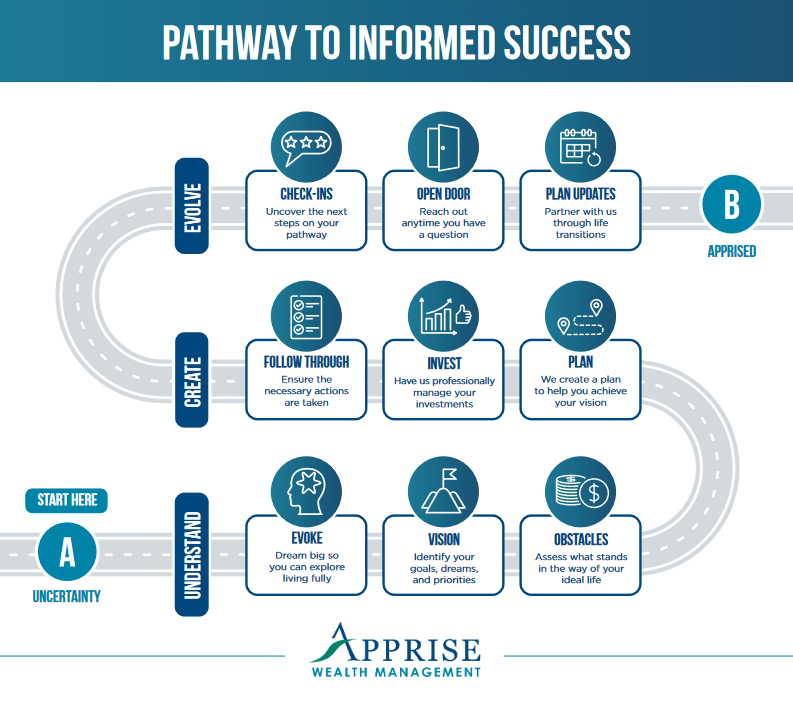
Pathway to Informed Success